Spares

Spares
  1. Boiler PCB Failure: How to Diagnose a Faulty PCB on Baxi, Vaillant and Worcester Bosch Boilers

    Boiler PCB Failure: How to Diagnose a Faulty PCB on Baxi, Vaillant and Worcester Bosch Boilers

    Your boiler has stopped responding, the displaying is flashing a fault code, and your engineer suspects the printer circuit board (PCB). Before you panic about costs or wait days for the parts to arrive, here is everything you need to know about identifying a PCB fault and sourcing the right genuine replacement quickly and confidently. 

    What does a Boiler PCB Actually Do?

    The PCB is essentially the brain of your boiler. It controls ignition, regulates the pump, reads sensor data, and manages safety shutdowns. Every function your boiler carries out passes through this single component, which is why a fault here can bring your entire heating system to a complete standstill. Understanding its role is the first step towards a faster, more cost effective repair. 

    Common Signs of PCB Failure

    PCB faults do not always announce themselves dramatically. The most telling symptoms include persistent fault codes on the display, random lockouts with no obvious cause, and a boiler that fires up briefly

    Read more »
  2. Boiler and Water Heater Spare Parts: How to Identify the Right Replacement Component

    Boiler and Water Heater Spare Parts: How to Identify the Right Replacement Component

    Picture this: an engineer arrives, tools in hand, only to discover the replacement part is wrong. Another callout fee, more downtime, and a very frustrated facilities manager. It doesn't have to be this way. A few minutes of careful preparation before you order can save hundreds of pounds and keep your heating systems running without interruption. 

    Why Getting the Right Part Matters

    Ordering the wrong spare part is one of the most avoidable (and costly) mistakes in building maintenance. Whether you're managing a busy commercial site or troubleshooting at home, a mismatched component means repeat callouts, extended downtime, and potentially voided warranties. The golden rule is simple: always match the part number, not just the description. Similar-looking parts from the same manufacturer can have critical differences in pressure ratings, fittings, or capacity that make them entirely unsuitable for your unit. 

    Start With Your Model Number and Part Number

    Every water heater and boiler carries

    Read more »
  3. What's the Difference Between Internal and External Expansion Vessels?

    What's the Difference Between Internal and External Expansion Vessels?

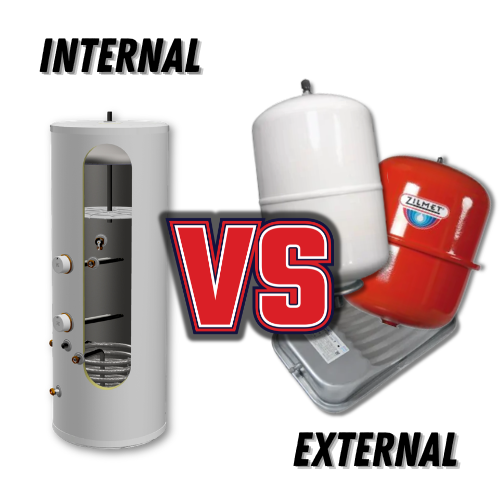
    Did you know that not all expansion vessels are the same? Some live inside your cylinder and some sit on the outside. Knowing the difference helps you buy the right part, plan your installation, and avoid any nasty surprises down the line. Let's break it down together

    What is an Internal Expansion Vessel?

    An internal expansion vessel is built straight into the cylinder at the factory. it handles pressure from the inside without you needing to fit anything extra. You will find these in unvented cylinders like the Megaflo.

    The big benefit here is a clean and tidy install. There are no extra components on show, which makes it a great option when space is tight or when you want a clean finish. Because everything is self contained, there is less pipework to worry about too. 

    The trade off is accessibility. If the internal vessel ever fails, a Gas Safe engineer will need to get inside the cylinder to repair or replace it. This makes the job a little more involved compared to the external fix.

    Read more »
  4. Signs Your Expansion Vessel Has Failed (And What To Do About It)

    Expansion Vessels

    Your boiler works hard to keep your home warm and cosy but quietly behind the scenes, your expansion vessel is doing some serious heavy lifting. When this unit fails, things can go wrong fast. So, how do you spot the signs before you're left in the cold? Let's walk through everything you need to know. 

    What is an Expansion Vessel?

    An expansion vessel is a small but mighty component inside your boiler. As water heats up, it expands and the expansion vessel absorbs the extra pressure to keep your heating system running safely and smoothly. Think of it as your boiler's pressure relief valve. Without it working correctly, your system quickly runs into trouble. 

    Signs Your Expansion Vessel Has Failed

    Watch out for these tell-tale signs: 

    • Loss of pre-charge pressure - The vessel contains nitrogen or pre-air charge. Over time, this charge slowly leaks out, meaning the diaphragm can't push back against expanding water properly. The result is the pressure relief valve frequently lifting or pressure
    Read more »
  5. Reliance RWC - Innovative Plumbing Solutions for Safer, Smarter Water Systems

    Reliance RWC -  Innovative Plumbing Solutions for Safer, Smarter Water Systems

    Reliance Worldwide Corporation (RWC) has been a trusted name in plumbing since 1949. Over the years, they've built a strong reputation for making water systems safer, more reliable, and more efficient for homes and businesses around the world. 

    RWC Product Range

    RWC have a large range of products designed to protect and improve plumbing systems: 

    Thermostatic Mixing Valves (TMVs): These valves blend hot and cold water to ensure safe and comfortable temperatures, reducing the risk of burns and scalds. Models like Heatguard Dual and Ausimix Compact offer features such as rapid failsafe on supply, temperproof caps, and scale-resistant components.

    Pressure Reducing Valves (PRVs): Devices like the Reliance 3 Bar 22mm PRV reduce incoming mains water pressure to a safe, consistent 3 bar, protecting plumbing systems and appliances from damage caused by high pressure.

    Temperature and Pressure Relief Valves (TPRVs): Models such as the PREL355030 protect unvented hot water systems from over-pressurisation

    Read more »